Is your factory experiencing frequent downtime? There's a 90% chance that the root cause lies in the selection and maintenance of your grinding tools! In this article, we'll delve deep into the specification matching, material - adapted design, and scientific maintenance strategies of brazed diamond abrasives. Through real - life case studies, we'll show you how to significantly reduce downtime and extend tool life through proper selection and daily management, enabling industrial processing enterprises to achieve efficient and stable production. Whether you're an equipment supervisor or a process engineer, this guide will help you find the key breakthroughs.
The relationship between different diameters (such as 180mm/150mm) and base materials is crucial. Let's analyze the optimal configuration based on actual application scenarios. For example, in high - speed grinding operations, a smaller diameter tool with a high - strength base material might be more suitable. The following table provides a quick reference for tool selection:
| Tool Diameter | Base Material | Application Scenario |
|---|---|---|
| 180mm | High - carbon steel | General - purpose grinding of large - scale workpieces |
| 150mm | Alloy steel | Precision grinding of medium - sized workpieces |
When it comes to materials like gray iron, ductile iron, stainless steel, cemented carbide, and stone, each has its own unique grinding characteristics. We'll explain in detail how to optimize the tool structure according to the material. For instance, when grinding gray iron, a tool with a specific tooth profile and abrasive distribution can improve the grinding efficiency by up to 30% compared to a standard tool.
From the cleaning process to wear detection standards, we provide a practical checklist and replacement judgment logic. Here's a step - by - step guide:
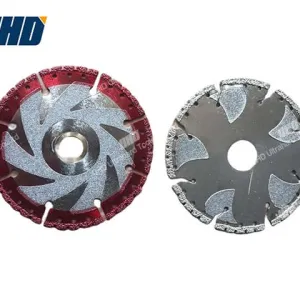
Let's take a look at a real - life example. A machinery factory reduced its downtime by 40% after standardizing the use of UHD customized brazed diamond abrasives. This shows the significant impact that proper tool selection and maintenance can have on your factory's efficiency.
How can I tell if it's time to replace the abrasive tool?
Check for visible wear, measure the wear depth, and monitor the grinding performance. If the tool is not achieving the desired results or the wear depth exceeds 0.5mm, it's time to replace it.
Discover more about the application solutions of UHD customized brazed diamond abrasives by clicking here.






.png?x-oss-process=image/resize,m_fill,h_400,w_400/format,webp)