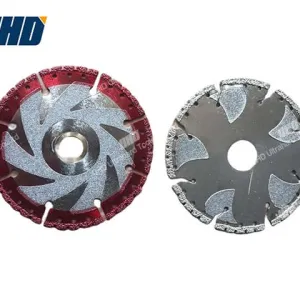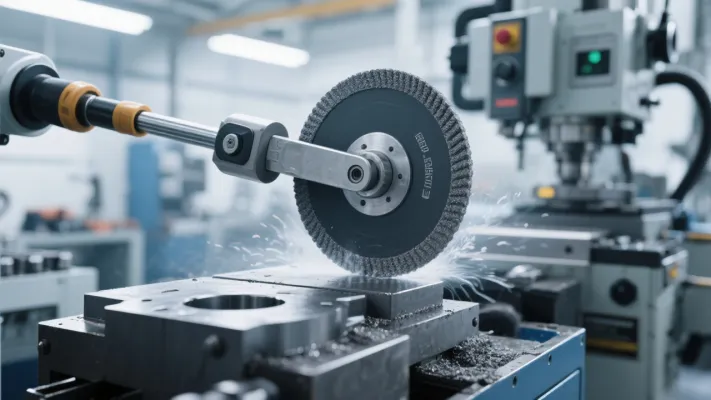
When grinding ductile iron—a material widely used in automotive, aerospace, and heavy machinery industries—precision and consistency are not just goals—they’re non-negotiables. Yet, many operators face recurring issues: cracked wheels, surface defects on parts, and unexpected downtime. The root cause? Often, it's not the wheel itself—but how it’s installed and calibrated.
Modern welded diamond grinding wheels are engineered with advanced anti-impact features—such as reinforced bonding matrices and optimized grain distribution—that reduce fracture risk by up to 60% compared to traditional resin-bonded wheels (per ISO 13768:2021). However, even the best design fails without proper setup. A study from the International Journal of Advanced Manufacturing Technology found that 43% of premature wheel failures stem from improper clamping or imbalance—not poor material quality.
Key installation steps include:
Even with perfect installation, incorrect parameters will compromise results. For ductile iron, the ideal grinding window includes:
| Parameter | Recommended Range | Why It Matters |
|---|---|---|
| Feed Rate | 0.05–0.15 mm/rev | Prevents overheating and micro-cracking |
| Depth of Cut | 0.02–0.05 mm per pass | Reduces thermal shock and wheel wear |
| Coolant Flow | ≥ 20 L/min at 3 bar pressure | Maintains temperature below 150°C |
Curved surfaces introduce localized stress points that can lead to edge chipping—even if the rest of the wheel remains intact. To mitigate this:
These practices have been validated in real-world production lines across Germany and Japan, where defect rates dropped by an average of 37% after implementing standardized calibration protocols.
Our patented braze-welded diamond grinding wheels meet ISO 13768 and CE standards, offering unmatched durability and safety for ductile iron applications. Backed by a 2-year warranty and 24/7 technical support, we ensure your operation runs smoothly—from installation to final cut.
Get Your Free Calibration Checklist + Technical Manual
 402
|
402
|
 diamond grinding wheel longevity
abrasive wheel selection guide
high-performance grinding solutions
brazed diamond wheel applications
surface finish optimization
40
|
brazed diamond grinding wheel
ISO9001 quality management
superhard grinding tools
industrial grinding solutions
diamond grinding wheel after-sales service
457
|
diamond grinding wheel maintenance
grinding wheel rust prevention
grinding tool lifespan management
gray cast iron grinding
brazed diamond grinding wheel
35
|
Brazed diamond grinding wheel customization
Non - standard size grinding wheels
CE - certified grinding wheels
Intellectual property protection
Global logistics distribution
diamond grinding wheel longevity
abrasive wheel selection guide
high-performance grinding solutions
brazed diamond wheel applications
surface finish optimization
40
|
brazed diamond grinding wheel
ISO9001 quality management
superhard grinding tools
industrial grinding solutions
diamond grinding wheel after-sales service
457
|
diamond grinding wheel maintenance
grinding wheel rust prevention
grinding tool lifespan management
gray cast iron grinding
brazed diamond grinding wheel
35
|
Brazed diamond grinding wheel customization
Non - standard size grinding wheels
CE - certified grinding wheels
Intellectual property protection
Global logistics distribution
 151
|
brazed diamond grinding wheels
wear resistance enhancement
impact resistance improvement
gray cast iron machining
superhard abrasive manufacturing
151
|
brazed diamond grinding wheels
wear resistance enhancement
impact resistance improvement
gray cast iron machining
superhard abrasive manufacturing