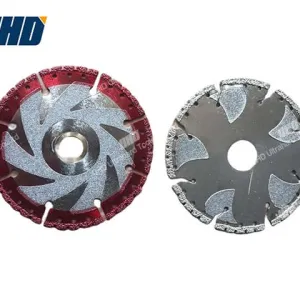
If you're working with ductile iron (also known as nodular cast iron), you know how frustrating it is when your diamond grinding wheels suddenly crack or chip mid-operation. According to industry data from the International Association of Abrasive Technology, up to 35% of wheel failures in precision grinding are caused by avoidable factors — not material issues.
Most operators focus on cutting speed and coolant flow — but they miss two critical areas: installation accuracy and parameter tuning. A recent survey of 120 CNC grinding shops revealed that over 60% had never performed a proper dynamic balance check on their wheel holders before mounting. That’s a recipe for stress concentration, especially during curved surface grinding.
Here’s what most engineers overlook:
For ductile iron, the ideal combination isn’t one-size-fits-all. Based on real-world tests across automotive and aerospace sectors:
| Parameter | Recommended Range | Why It Works |
|---|---|---|
| Feed Rate | 0.02–0.05 mm/rev | Reduces heat buildup while maintaining chip clearance. |
| Depth of Cut | 0.05–0.1 mm | Prevents sudden load spikes on brittle grains. |
| Coolant Flow | ≥ 15 L/min | Maintains temperature below 80°C at the interface. |
When grinding convex or concave surfaces, stress concentrates at the leading edge of the wheel. To prevent premature fracture:
Before each shift, run through this quick checklist:
Let every grind be predictable. No more surprises. Just better results — consistently.

 350
|
350
|
 Brazed diamond grinding tool maintenance
Brazed diamond tool service life
Industrial grinding tool selection
Customized brazed tool design
Industrial processing efficiency improvement
79
|
Diamond grinding wheel life management
Surface temperature anomaly warning
Brazed diamond grinding wheel
Grinding tool maintenance
Industrial grinding efficiency improvement
Brazed diamond grinding tool maintenance
Brazed diamond tool service life
Industrial grinding tool selection
Customized brazed tool design
Industrial processing efficiency improvement
79
|
Diamond grinding wheel life management
Surface temperature anomaly warning
Brazed diamond grinding wheel
Grinding tool maintenance
Industrial grinding efficiency improvement
 372
|
Dual Function Diamond Tools
Cutting Tools
Grinding tools
Efficiency Tools
214
|
brazed diamond grinding wheels
diamond wheel bonding methods
high-temperature grinding tools
superhard abrasive longevity
industrial grinding efficiency
454
|
brazed diamond grinding disc technology
high wear resistance grinding disc quality control
ISO certified grinding disc standards
customized diamond grinding disc solutions
diamond disc performance optimization
372
|
Dual Function Diamond Tools
Cutting Tools
Grinding tools
Efficiency Tools
214
|
brazed diamond grinding wheels
diamond wheel bonding methods
high-temperature grinding tools
superhard abrasive longevity
industrial grinding efficiency
454
|
brazed diamond grinding disc technology
high wear resistance grinding disc quality control
ISO certified grinding disc standards
customized diamond grinding disc solutions
diamond disc performance optimization