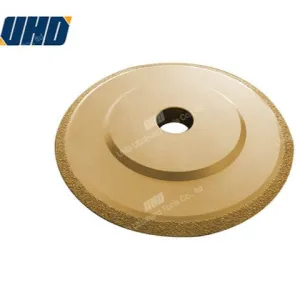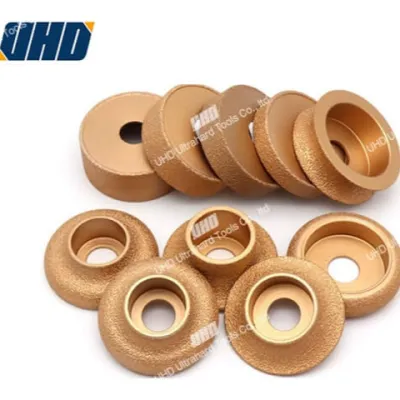
In industrial grinding operations, frequent interruptions due to improper life management of diamond grinding wheels have become a significant headache for many industrial users. These interruptions not only reduce production efficiency but also increase production costs. This article, from the perspective of engineers' practical operations, focuses on the scientific maintenance and life monitoring of brazed diamond grinding wheels, aiming to help industrial users accurately judge the replacement time of grinding wheels and avoid sudden failures.
One of the key factors affecting the life of diamond grinding wheels is the shedding of abrasive grains. Misjudging the degree of abrasive grain shedding can lead to premature or delayed replacement of grinding wheels. To avoid such misjudgments, we can use the following methods. Through years of on - site technical services, UHD has found that when the percentage of abrasive grain shedding reaches about 30%, the grinding performance of the wheel will be significantly affected. For example, if the abrasive grains are shed in large pieces, it may be due to improper brazing or excessive grinding pressure. Figure 1 shows the normal and abnormal states of abrasive grains, which can help users visually identify the degree of abrasive grain shedding.
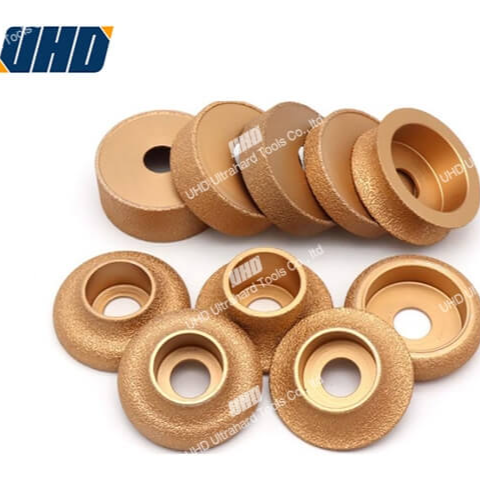
The change of grinding force is an important indicator reflecting the wear of diamond grinding wheels. By monitoring the change trend of grinding force, we can more accurately judge the wear state of grinding wheels. Modern grinding equipment is usually equipped with sensors that can feedback parameters such as grinding force. By analyzing these parameters, we can determine whether the grinding wheel needs to be replaced. For instance, if the grinding force increases by more than 20% compared with the initial value, it may indicate that the grinding wheel is severely worn. We can use the following formula to calculate the change rate of grinding force: Change rate of grinding force = (Current grinding force - Initial grinding force) / Initial grinding force × 100%. This method can improve the accuracy of judgment and avoid relying solely on subjective experience.
The surface temperature of the grinding wheel is also closely related to its wear state. Abnormal surface temperature may indicate problems such as excessive friction or poor heat dissipation. There are two common methods for temperature detection: infrared temperature measurement and manual touch. Infrared temperature measurement is more accurate and can detect the surface temperature of the grinding wheel in real - time, while manual touch is more intuitive but has a certain error. When the surface temperature of the grinding wheel exceeds 80°C, it may be a sign of abnormal wear. Figure 2 shows the principle and application scenarios of infrared temperature measurement.
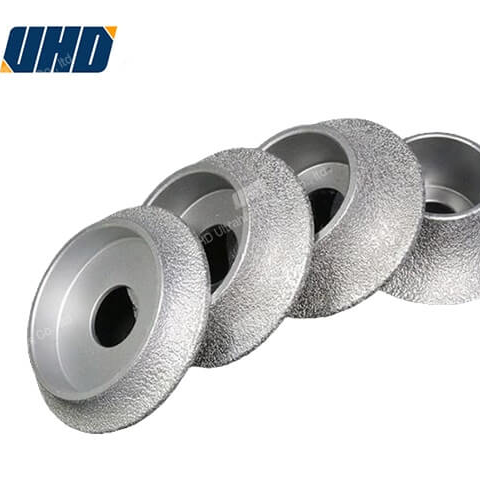
Based on years of technical service accumulation, UHD has summarized high - frequency failure signals of diamond grinding wheels. These signals include abnormal noise during grinding, vibration of the grinding equipment, and a significant decrease in grinding accuracy. The 'Three - step Diagnosis Method' includes: first, observing the appearance of the grinding wheel to check for obvious damage; second, monitoring the grinding force and surface temperature to detect abnormal changes; third, analyzing the grinding quality to determine whether the grinding wheel needs to be replaced.
Proper daily maintenance and storage can effectively extend the life of diamond grinding wheels. Table 1 shows a detailed daily maintenance form for grinding wheels, including cleaning, lubrication, and inspection items. In addition, to prevent rust, we can use anti - rust agents and store the grinding wheels in a dry environment. Figure 3 shows some effective anti - rust storage methods.

In conclusion, scientific life management of diamond grinding wheels is crucial for improving grinding continuity and processing quality. By accurately identifying abrasive grain shedding, monitoring the change trend of grinding force, and giving early warnings of abnormal surface temperature, industrial users can make more scientific decisions on grinding wheel replacement. Welcome to leave a message to get the PDF of 'Self - inspection Form for Diamond Grinding Wheel Life Management' and click to consult our technical support team at CTA - URL. This will help you better manage the life of diamond grinding wheels and ensure the stable operation of your production line.

 421
|
421
|
 brazed diamond grinding wheels
diamond wheel brazing optimization
diamond particle density control
high-temperature grinding tools
industrial grinding solutions
403
|
brazed diamond grinding disc quality control
ISO9001 superhard tool manufacturing
diamond grinding disc wear resistance improvement
industrial grinding tool reliability
precision grinding solutions
46
|
Brazed diamond grinding wheels
High - intensity grinding tools
Customized grinding wheel services
Gray cast iron processing
Industrial grinding solutions
438
|
brazed diamond grinding disc
diamond grinding tools
ISO9001 quality management
grinding disc after-sales service
industrial grinding solutions
277
|
Brazed diamond grinding discs
High - wear - resistant grinding discs
Grinding disc quality control
Grinding disc parameter optimization
Customized grinding disc solutions
brazed diamond grinding wheels
diamond wheel brazing optimization
diamond particle density control
high-temperature grinding tools
industrial grinding solutions
403
|
brazed diamond grinding disc quality control
ISO9001 superhard tool manufacturing
diamond grinding disc wear resistance improvement
industrial grinding tool reliability
precision grinding solutions
46
|
Brazed diamond grinding wheels
High - intensity grinding tools
Customized grinding wheel services
Gray cast iron processing
Industrial grinding solutions
438
|
brazed diamond grinding disc
diamond grinding tools
ISO9001 quality management
grinding disc after-sales service
industrial grinding solutions
277
|
Brazed diamond grinding discs
High - wear - resistant grinding discs
Grinding disc quality control
Grinding disc parameter optimization
Customized grinding disc solutions