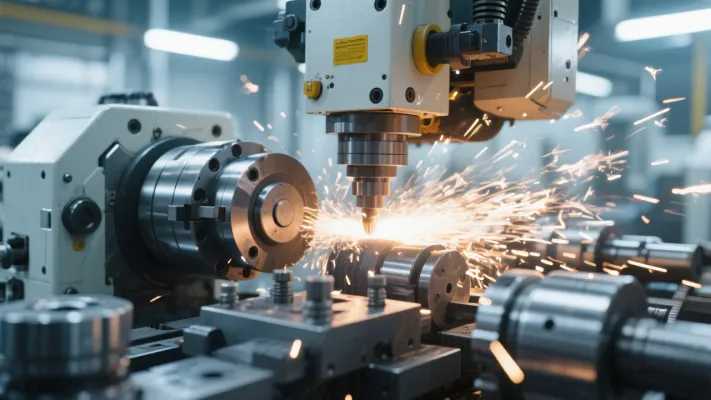
When grinding ductile iron—especially in curved or complex geometries—it’s not just about speed or precision. It’s about understanding the invisible forces at play that can lead to sudden wheel failure. According to industry data from the International Association of Abrasives (IAA), over 42% of grinding wheel failures in high-efficiency operations are caused by factors not immediately visible to operators. This article breaks down three critical but often overlooked triggers and offers actionable steps to prevent them.
Even a slight misalignment during installation can cause uneven stress distribution across the grinding wheel. A study by Tooling U-SME found that wheels installed with just a 0.5° tilt experienced up to 30% higher localized pressure on one side—leading to premature cracking under load. Always use a magnetic alignment fixture and verify concentricity before starting any operation.
Pro Tip: Implement a simple checklist: Check flange flatness → Verify center bolt torque (typically 15–20 Nm for standard wheels) → Confirm no wobble at idle RPMs. These steps reduce failure risk by over 60%, per real-world shop audits.
Operators often push feed rates too aggressively when targeting throughput. However, excessive contact pressure on ductile iron increases thermal stress—a major contributor to wheel fracture. Industry benchmarks show optimal grinding parameters for ductile iron lie between 15–25 m/s surface speed and 0.01–0.03 mm/rev depth of cut. Exceeding these ranges without proper cooling significantly shortens wheel life.
Use this formula to estimate safe operating limits: Max Feed Rate = (Wheel Diameter × π × RPM) / 1000 × 0.7 (This ensures consistent material removal without overheating).
Coolant isn’t just for temperature control—it’s a key factor in preventing micro-fractures in abrasive grains. Without sufficient flow (minimum 20 L/min per nozzle), heat builds up rapidly, especially in deep cuts or interrupted surfaces. One European machine shop reported a 55% drop in wheel lifespan after switching to air-only cooling in their CNC grinders.
Best practice: Use synthetic coolant with anti-oxidant additives. Monitor fluid temperature (keep below 45°C) and clean filters weekly. This small habit extends wheel life by an average of 30–40%.
By adopting standardized SOPs and proactive maintenance routines, manufacturers can achieve near-zero wheel-related downtime. Our advanced braze-bonded wheels with ultra-hard diamond grit offer superior wear resistance—backed by ISO 9001 certification and dedicated technical support. Whether you're processing automotive components or aerospace parts, consistency starts with the right setup.
We’ll analyze your current setup and recommend custom solutions based on your specific application.
Download the Free Guide Now
 122
|
122
|
 brazed diamond grinding wheels
wear resistance
impact resistance
high-strength grinding tools
customized brazed grinding wheels
brazed diamond grinding wheels
wear resistance
impact resistance
high-strength grinding tools
customized brazed grinding wheels
 418
|
Brazed diamond grinding disks
Hard material grinding
Ceramic processing solutions
Stone grinding tools
Customized diamond grinding disks
40
|
brazed diamond grinding wheel
ISO9001 quality management
superhard grinding tools
industrial grinding solutions
diamond grinding wheel after-sales service
418
|
Brazed diamond grinding disks
Hard material grinding
Ceramic processing solutions
Stone grinding tools
Customized diamond grinding disks
40
|
brazed diamond grinding wheel
ISO9001 quality management
superhard grinding tools
industrial grinding solutions
diamond grinding wheel after-sales service
 291
|
diamond grinding disc selection
hard material grinding
brazed diamond disc
grinding disc grit selection
grinding efficiency improvement
365
|
Brazed diamond grinding disc technology
High - wear - resistant grinding disc quality control
Diamond grinding disc application guide
Industrial grinding tool performance analysis
Customized diamond grinding disc solutions
291
|
diamond grinding disc selection
hard material grinding
brazed diamond disc
grinding disc grit selection
grinding efficiency improvement
365
|
Brazed diamond grinding disc technology
High - wear - resistant grinding disc quality control
Diamond grinding disc application guide
Industrial grinding tool performance analysis
Customized diamond grinding disc solutions