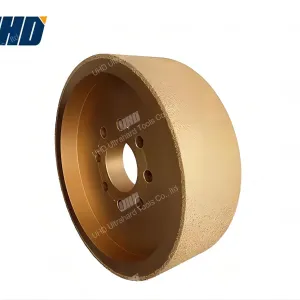
In the realm of ductile iron processing, operators and process engineers often encounter a series of challenges that significantly impact the efficiency and quality of grinding operations. This article delves into the common pain points in on - site operations, analyzes their root causes, and offers systematic solutions to achieve efficient, stable, and trouble - free grinding.
From the front - line perspective, operators frequently face issues such as diamond wheel breakage and surface scratches on workpieces. Statistics show that approximately 30% of grinding operations experience wheel breakage, and about 25% result in surface damage to the workpieces. These problems not only reduce production efficiency but also increase costs due to rework and tool replacement.
Some diamond wheels have inherent structural design flaws, which can lead to uneven stress distribution during grinding. For example, a poorly designed wheel may cause excessive stress concentration in certain areas, increasing the risk of breakage.
Installation non - compliance is another major cause. Incorrect installation can cause the wheel to be off - balance, leading to vibrations during operation. It is estimated that about 20% of wheel breakages are due to improper installation.
Wrong grinding parameters, such as incorrect feed rates, cutting depths, and coolant flow rates, can also cause problems. In fact, up to 40% of grinding inefficiencies can be attributed to improper parameter settings.
Balancing the diamond wheel is crucial to reduce vibrations and prevent breakage. Regular balance calibration can improve the stability of the grinding process. Operators should perform balance checks before each use and adjust the wheel as needed.
Proper clamping force is essential to ensure the wheel's stability during operation. Too much clamping force can damage the wheel, while too little can cause it to loosen. A recommended clamping force range should be determined based on the wheel's specifications.
Effective coolant management is vital for reducing heat and preventing wheel wear. The coolant flow rate should be adjusted according to the grinding parameters. Maintaining an appropriate coolant flow can reduce the risk of wheel breakage by up to 30%.
Curved surface machining presents unique challenges, especially in terms of stress distribution. Understanding the stress distribution law in curved surface grinding is key to optimizing the clamping method. By analyzing the stress distribution through simulation and experiments, operators can adjust the clamping position and force to reduce stress concentration.
To enhance practicality, a standardized SOP process should be developed. This process includes steps for wheel installation, parameter setting, and coolant management. Additionally, a simple inspection checklist should be provided for operators to quickly troubleshoot common problems. The checklist can help reduce the time spent on problem - solving by up to 50%.
Many companies have successfully implemented these preventive measures. For example, Company X reduced its wheel breakage rate from 25% to 5% and increased its grinding efficiency by 30% after implementing a comprehensive preventive program. This case shows that by following the proposed solutions, companies can achieve significant improvements in grinding operations.
By implementing the strategies outlined in this article, operators and process engineers can enhance efficiency, reduce risks, and ensure safe and consistent grinding operations. To learn more about optimizing your ball - ductile iron grinding process, click here.

 402
|
402
|
 diamond grinding wheel longevity
abrasive wheel selection guide
high-performance grinding solutions
brazed diamond wheel applications
surface finish optimization
418
|
Brazed diamond grinding disks
Hard material grinding
Ceramic processing solutions
Stone grinding tools
Customized diamond grinding disks
231
|
diamond grinding wheels
impact resistance evaluation
metal bonded diamond wheels
resin bonded diamond wheels
hard material grinding
126
|
Brazed diamond grinding wheels
Wear resistance enhancement
Impact resistance
Gray cast iron processing
Superhard abrasive manufacturing
diamond grinding wheel longevity
abrasive wheel selection guide
high-performance grinding solutions
brazed diamond wheel applications
surface finish optimization
418
|
Brazed diamond grinding disks
Hard material grinding
Ceramic processing solutions
Stone grinding tools
Customized diamond grinding disks
231
|
diamond grinding wheels
impact resistance evaluation
metal bonded diamond wheels
resin bonded diamond wheels
hard material grinding
126
|
Brazed diamond grinding wheels
Wear resistance enhancement
Impact resistance
Gray cast iron processing
Superhard abrasive manufacturing
 32
|
diamond core drilling
concrete drilling services
professional drilling contractors
32
|
diamond core drilling
concrete drilling services
professional drilling contractors