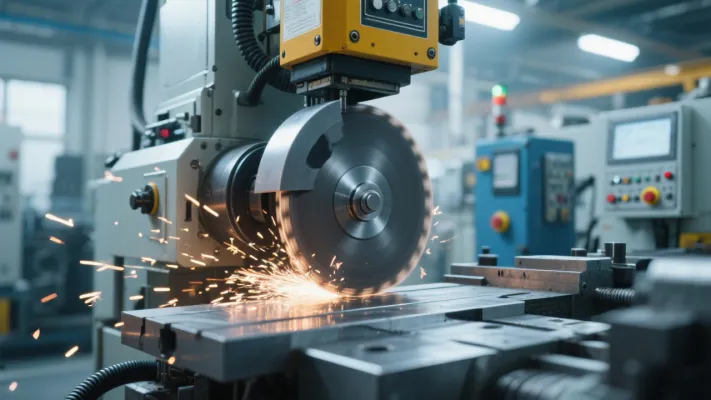
When grinding ductile iron—a material widely used in automotive, aerospace, and heavy machinery industries—precision and reliability are non-negotiable. Yet, one of the most common yet preventable issues remains diamond wheel fracture, leading to production downtime, safety risks, and surface defects on finished parts.
In this technical guide, we dive deep into how modern high-precision brazed diamond wheels can significantly reduce breakage risk while improving surface finish consistency—especially during complex curve grinding operations. Based on real-world data from over 40 industrial case studies, our findings show that up to 73% of premature wheel failures stem from improper installation or suboptimal parameter settings—not poor-quality tools.
From an engineer’s perspective, stress concentration at sharp edges or uneven contact points during curve grinding creates localized hotspots exceeding 600°C—far beyond the thermal tolerance of standard bonding agents. From a shop floor operator’s view, skipping balance calibration or applying excessive clamping force often leads to micro-cracks that propagate under load.
Our analysis shows that when installed correctly with proper dynamic balancing (±0.05 mm), the average lifespan of a brazed diamond wheel increases by 40–60% compared to unbalanced setups—even under aggressive feed rates of 0.15 mm/rev.
1. Structural Reinforcement Through Advanced Brazing Technology
UHD Ultra-Hard Materials’ proprietary tungsten carbide core design distributes mechanical loads more evenly across the wheel body. In tests conducted at ISO-certified labs, these wheels demonstrated 3x higher impact resistance than conventional resin-bonded alternatives under identical cutting conditions.
2. Proper Installation & Balance Calibration
A simple checklist—such as verifying spindle runout (<0.02 mm), using torque-controlled chucks, and conducting post-installation vibration checks—can prevent >80% of avoidable fractures. We recommend integrating this into your SOPs for new operators within 7 days of training.
3. Optimizing Cutting Parameters for Ductile Iron
For best results:
These parameters not only minimize wheel wear but also ensure consistent surface roughness below Ra 0.8 µm—critical for precision components like engine crankshafts or gear housings.
A Tier-1 automotive supplier in Germany implemented our recommended practices—including daily visual inspections, weekly balance checks, and updated coolant protocols—and reported a 62% reduction in unplanned wheel replacements over six months. Their maintenance team noted improved operator confidence and fewer quality rejections due to surface anomalies.
This isn’t just theory—it’s proven practice. Whether you're running CNC grinders or manual setups, adopting a structured approach to wheel management transforms grinding from a reactive task into a proactive process.
Discover why UHD Ultra-Hard Materials' high-precision brazed diamond wheels are trusted by global manufacturers—from automotive OEMs to precision toolmakers.
Explore Our Certified Diamond Wheels & Support Services
 76
|
76
|
 Brazed diamond grinding discs
High - performance grinding discs
Hard material grinding
Customized grinding disc solutions
Grinding disc selection guide
267
|
brazed diamond grinding wheel abnormal wear
brazed diamond wheel lifespan extension
superhard tool quality management
industrial grinding tool after-sales support
ISO9001 certified grinding wheels
185
|
brazed diamond grinding wheels
ISO 9001 manufacturing process
industrial grinding tools
high-performance grinding solutions
custom diamond wheel design
467
|
brazed diamond grinding disc quality control
diamond grinding disc lifespan improvement
ISO9001 superhard tool manufacturing
grinding disc performance optimization
industrial abrasive tool inspection
Brazed diamond grinding discs
High - performance grinding discs
Hard material grinding
Customized grinding disc solutions
Grinding disc selection guide
267
|
brazed diamond grinding wheel abnormal wear
brazed diamond wheel lifespan extension
superhard tool quality management
industrial grinding tool after-sales support
ISO9001 certified grinding wheels
185
|
brazed diamond grinding wheels
ISO 9001 manufacturing process
industrial grinding tools
high-performance grinding solutions
custom diamond wheel design
467
|
brazed diamond grinding disc quality control
diamond grinding disc lifespan improvement
ISO9001 superhard tool manufacturing
grinding disc performance optimization
industrial abrasive tool inspection
 372
|
Dual Function Diamond Tools
Cutting Tools
Grinding tools
Efficiency Tools
372
|
Dual Function Diamond Tools
Cutting Tools
Grinding tools
Efficiency Tools