Diamond Grinding Wheel Selection Guide for Hard Materials: Grit, Bond, Diameter and Impact Resistance
2026/02/17
UHD
Technical knowledge
Wrong diamond grinding wheel choices often lead to low removal rates, premature wear, unstable surface finish, and unplanned downtime when you grind hard materials. This practical guide helps you select the right wheel by breaking down the key decision factors—wheel diameter range, flat vs. profiled (curved) geometry, diamond grit size, and bond type (including brazed solutions). You’ll get material-matched recommendations for stone, glass, ceramics, cemented carbide, stainless steel, and cast iron, plus a clear explanation of why impact resistance becomes critical under high-load and interrupted-cut conditions. Built on real industrial application learnings, it also introduces a simple five-step selection method and a grit-to-finish reference to help you improve efficiency, tool life, and surface quality—supported by ISO-controlled manufacturing and UHD brazing technology with customization options for your process.
You’re Losing Time on Hard Materials—Most Often, It’s the Diamond Grinding Disc Choice
If your grinding line looks “busy” but output is flat, the disc is usually working against you. In hard-material grinding, a mismatch in disc diameter, disc geometry, diamond grit size, or bond type quietly shows up as: slower stock removal, unstable surface finish, premature wear, and heat-related microcracks.
This guide walks you through a practical selection logic—plus material-specific recommendations for stone, glass, ceramics, and carbide—so you can stabilize quality and push throughput without gambling on trial-and-error.
Quick check: Are you seeing burn marks, chipping, or “random” finish variation even when operators follow the same SOP?
The 4 Core Variables That Decide Grinding Performance
Every “best” diamond grinding disc is best only under a specific load, material, coolant condition, and machine stiffness. In B2B production, you want a disc that keeps removal rate stable as conditions drift. Focus on these four variables first.
1) Diameter & Contact Area: Throughput vs. Control
Larger diameter generally improves linear speed at the rim and can raise removal rate—if your spindle power and rigidity support it. A practical factory rule is: increase diameter only when power margin is >15% and vibration is controlled.
Typical industrial ranges: 100–250 mm for handheld or light CNC finishing, 250–450 mm for production grinding, and 450 mm+ for high-throughput flat grinding lines. Oversizing often causes glazing and temperature spikes.
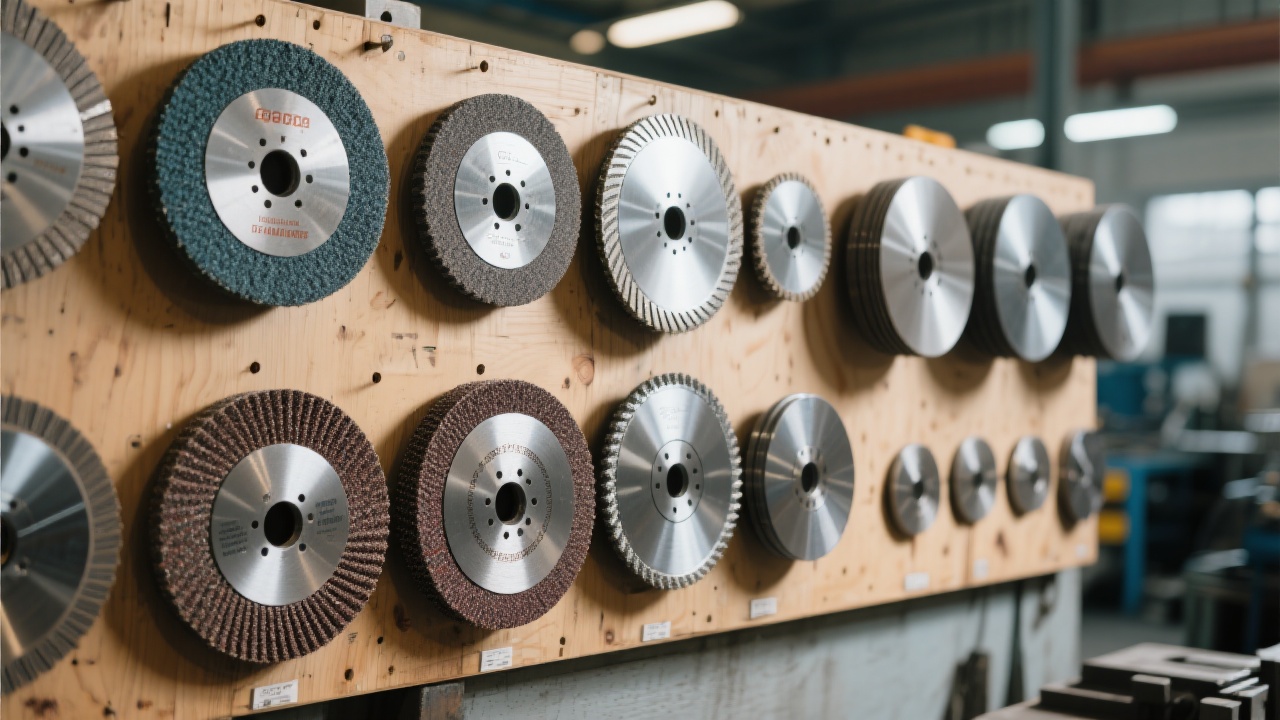
2) Flat vs. Profiled Geometry: Your Finish Depends on It
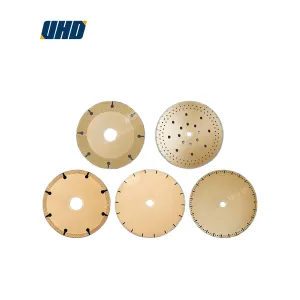
Flat discs are your go-to for planar correction, consistent Ra control, and predictable wear. Profiled/curved discs (radius, bevel, edge tools) help you maintain shape fidelity on chamfers, arcs, and contoured parts—especially where edge chipping is costly.
If you’re fighting edge damage: don’t only change grit—often you need a geometry that keeps pressure distribution stable at the edge, plus a bond that absorbs intermittent contact.
3) Diamond Grit Size: Removal Rate vs. Surface Quality
Grit size is not “the finer the better.” Coarse grits cut aggressively but leave deeper scratches; fine grits improve finish but can generate heat if feed and coolant are not optimized.
Infographic: Grit vs. Finish (Practical Reference)
Diamond Grit (approx.)
Primary Use
Typical Scratch / Finish Behavior
Operational Notes
30/40–50/60
Fast stock removal, leveling
Visible scratches; rough finish
Use stable coolant; avoid fragile edges
80/100–100/120
General grinding, pre-finish
Balanced; easier to control Ra
Often best for mixed batches
150/180–200/230
Fine finishing
Low scratch depth; cleaner sheen
Watch heat; adjust feed & pressure
400–600+
Micro-finish / optical prep
Very fine; near-polish base
Requires excellent rigidity & coolant
Note: Actual Ra depends on material, machine stiffness, and process window. As a reference, many production lines see ~30–50% Ra improvement when stepping from 80/100 to 150/180 with optimized feed and coolant.
4) Bond Type: How Your Disc Handles Heat, Impact, and Wear
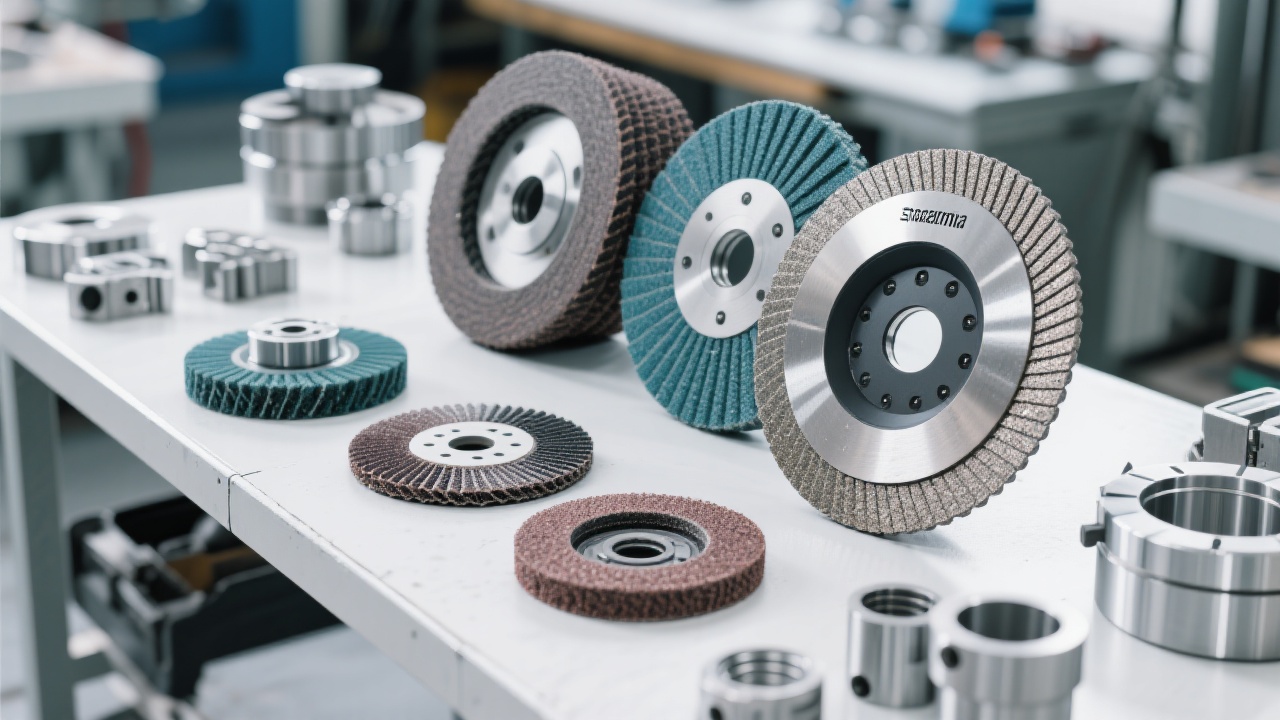
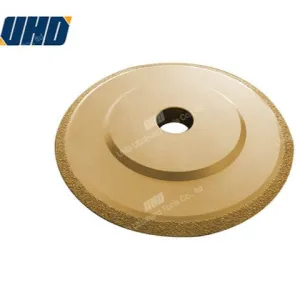
Bond selection decides whether diamonds are released at the right time (self-sharpening) or trapped until the disc glazes. In practice: metal bonds tend to hold diamonds longer for hard, abrasive materials; resin bonds can deliver smoother finishes but may wear faster under heavy load; brazed (vacuum/HD brazing) exposes diamond edges for aggressive cutting and high efficiency.
If you frequently switch between materials, a bond that tolerates process drift matters more than “theoretical best” efficiency.
Material-Based Recommendations (What to Choose When the Clock Is Running)
Below is a practical matching map. Use it as your first-pass selection, then tune by machine power, coolant, and target finish.
Material
Recommended Disc Type
Starting Grit Range
Why It Works
Stone (granite, engineered stone)
Brazed diamond disc / robust metal bond
50/60–100/120
High abrasion; brazed edges cut fast; metal bond stabilizes wear
Glass (architectural, technical)
Fine-grit resin/metal hybrid; controlled geometry
150/180–400
Reduces edge chipping; easier to manage subsurface damage with finer grit
Ceramics (Al₂O₃, zirconia)
Brazed or metal bond with impact tolerance
80/100–200/230
Hard + brittle; stable cutting reduces micro-chipping and rejects
Hard alloy / tungsten carbide
High-quality brazed diamond (high exposure) or precision metal bond
100/120–400
Maintains cutting edges under high hardness; supports consistent Ra
Gray cast iron / stainless steel
Usually avoid diamond; consider CBN for steels
—
Diamond can react with iron at high temp; CBN is typically better for ferrous
If you must grind mixed ferrous and non-ferrous on the same station, isolate tools by application to reduce unpredictable wear and thermal damage.
Why Impact Resistance Is the Silent KPI in High-Load Grinding
Many grinding problems are not “grit problems”—they’re impact problems. Intermittent contact, part runout, hand pressure variation, and machine vibration create micro-impacts that knock diamonds loose or crack the bond. The result is a disc that looks fine, but cuts inconsistently.
In internal testing commonly used across tool manufacturers, discs that withstand repetitive impact loads typically show: 20–40% longer effective life and more stable removal rate over a shift—especially on brittle materials like glass and advanced ceramics. If you’re chasing consistency, ask for evidence of impact/load validation, not just hardness charts.
This is also where modern UHD brazing (high-strength brazed retention) can make a measurable difference: stronger diamond anchoring helps resist pull-out during sudden load spikes, so you keep sharp edges exposed instead of losing them early.
The 5-Step Selection Method You Can Use Today
Define your goal in one sentence: “Remove X mm in Y minutes” or “Reach target finish with <Z% rejects.”
Lock the material behavior: brittle (glass/ceramic), abrasive (stone), ultra-hard (carbide), mixed.
Pick grit by process stage: roughing (30/40–60), general (80/100–120), finishing (150–230), fine (400+).
Choose bond for your load reality: high impact/high load → brazed or tougher metal bond; fine finish/low pressure → resin/hybrid.
Validate with a short production trial: compare removal rate (g/min or mm/min), disc wear (mm loss), and reject rate. A meaningful trial is typically 2–4 hours or at least 30 parts, not just a few passes.
Interactive prompt: What’s your biggest constraint right now—cycle time, disc life, or surface quality? Your answer determines whether you should prioritize grit, bond, or geometry first.
A Real-World Scenario: Fixing Instability Without Slowing the Line
Imagine you’re grinding technical ceramics on a high-utilization station. The first hour looks fine, then removal rate drops and edge chipping climbs. Operators compensate with pressure, which raises heat and makes finish variation worse.
In this type of case, a common improvement path is: switching from an overly fine “finish-first” grit to a balanced 100/120 pre-finish, then moving to 200/230; choosing a bond with better shock tolerance; and specifying a geometry that stabilizes edge contact. Many lines see 10–25% cycle time reduction simply by restoring stable cutting and stopping the pressure escalation loop.
If your operation is audited (medical, aerospace, precision optics), also consider requesting discs made under ISO-aligned quality systems and using traceable batches—it’s not paperwork; it’s how you keep performance consistent across reorders.
Common Mistakes That Quietly Destroy Disc Life
Running too fine too early: you generate heat, glaze the bond, and blame the disc.
Over-pressing to chase speed: higher pressure can reduce removal rate once the disc starts glazing.
Buying generic geometry: edge work and contours need profile control more than you think.
No performance baseline: without g/min (or mm/min) and reject %, you can’t prove improvements.
Want a Disc Recommendation That Fits Your Machine, Not Just Your Material?
If you share your material, target finish, disc size, spindle power, coolant condition, and whether the process sees impact loads, you can get a selection proposal tailored to your line. With UHD brazing technology, ISO-certified production control, and customizable grit/geometry, you can target stable removal rates and predictable surface quality—without endless trials.