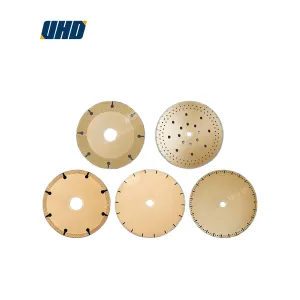
Selecting the right specifications of brazed diamond grinding tools is crucial for enhancing industrial processing efficiency. When choosing these tools, it's essential to understand the matching principles between substrate materials and diameter specifications. For example, for high - precision grinding tasks, a smaller diameter tool with a specific substrate material might be more suitable. This ensures that the tool can operate effectively in different application scenarios. Different industries, such as automotive manufacturing, aerospace, and general machinery, have varying requirements for grinding tools. By carefully analyzing the characteristics of each application scenario, manufacturers can make more scientific selections.
The choice of substrate material directly affects the performance and durability of the brazed diamond grinding tool. Common substrate materials include steel, aluminum alloy, etc. Steel substrates are known for their high strength and good heat resistance, which are suitable for heavy - duty grinding operations. Aluminum alloy substrates, on the other hand, are lighter, which can reduce the load on the machine and improve the operating speed. When it comes to diameter specifications, larger diameter tools are generally used for large - area grinding, while smaller diameter tools are more suitable for fine - detailed grinding. The following table shows a simple matching principle:
| Substrate Material | Diameter Specification | Application Scenario |
|---|---|---|
| Steel | Large diameter (> 100mm) | Heavy - duty grinding in automotive and machinery manufacturing |
| Steel | Small diameter (< 50mm) | Fine - detailed grinding in precision parts manufacturing |
| Aluminum alloy | Large diameter (> 100mm) | High - speed grinding in aerospace components manufacturing |
| Aluminum alloy | Small diameter (< 50mm) | Light - duty and high - speed grinding in electronics manufacturing |
When dealing with different processing materials such as gray iron, ductile iron, stainless steel, cemented carbide, and stone, customized design of brazed diamond grinding tools is necessary. Each material has its unique physical and chemical properties, which require specific tool designs to achieve the best grinding results.
Gray iron has relatively low hardness and good machinability. However, it has a tendency to produce chips during grinding. Therefore, the tool should be designed with a proper grit size and bond strength to ensure efficient chip removal and prevent clogging. A medium - grit size and a relatively soft bond can be a good choice for gray iron processing.
Ductile iron is stronger and more ductile than gray iron. It requires a tool with higher abrasion resistance and better toughness. A finer grit size and a stronger bond can be used to grind ductile iron, which can improve the surface finish and reduce the risk of tool wear.
Stainless steel has high toughness and low thermal conductivity, which makes it difficult to grind. The tool should be designed with a special diamond coating and a suitable cooling system to dissipate heat effectively and prevent the material from adhering to the tool. A coarse - grit size and a hard bond can be considered for stainless steel grinding.
Cemented carbide is extremely hard and wear - resistant. Only tools with high - quality diamonds and a very strong bond can be used for its grinding. A very fine grit size and a super - strong bond are required to achieve accurate grinding of cemented carbide.
Stone materials vary greatly in hardness and density. For soft stones, a coarser grit size and a relatively soft bond can be used for fast material removal. For hard stones, a finer grit size and a stronger bond are needed to ensure a smooth surface finish.
Proper daily maintenance is the key to extending the service life of brazed diamond grinding tools. Here is a five - step daily maintenance process:
Let's take a look at some typical industry cases to see how the correct selection and maintenance of brazed diamond grinding tools can bring benefits. In an automotive manufacturing plant, by using customized brazed diamond grinding tools for engine block grinding and following the proper maintenance process, the tool's service life was extended by 30%, and the production downtime was reduced by 20%. In a stone processing factory, through scientific tool selection and regular maintenance, the surface finish of the stone products was significantly improved, and the production efficiency was increased by 25%.
A: It is recommended to clean the tool after each use to prevent debris and coolant residues from affecting the tool's performance.
A: It is not recommended. Different processing materials have different properties, and customized tools are needed to achieve the best grinding results.
A: Regularly measure the tool's diameter, thickness, and check for signs of wear such as cracks, missing diamonds. If the wear exceeds the allowable limit, replace the tool.
Henan UHD Superhard Materials Tools Co., Ltd. (UHD) offers high - quality brazed diamond grinding tools. With years of experience in the industry, UHD can provide customized design solutions according to your specific processing requirements. Our tools are known for their long service life, high efficiency, and excellent grinding performance. Whether you are a large - scale manufacturing enterprise or a small - and - medium - sized factory, UHD can provide you with the most suitable products and services. To learn more about our products and customized services, please visit CTA - URL.





.png?x-oss-process=image/resize,m_fill,h_400,w_400/format,webp)